Compounded semaglutide has become one of the most searched health topics in the United States, and for good reason. With monthly search volume hitting 47,000 and FDA-approved brands like Ozempic and Wegovy carrying steep price tags, millions of Americans have turned to compounding pharmacies for a more affordable path to GLP-1 therapy.
But the ground has shifted significantly in 2026. The FDA declared the injectable semaglutide shortage resolved in February 2025, and Novo Nordisk's oral Wegovy pill launched in January 2026. These developments have changed the legal and practical picture for compounded versions of this drug.
So where does that leave patients who've been using compounded semaglutide, or those considering it for the first time? This guide breaks down what compounded semaglutide actually is, how it compares to brand-name options, the real safety risks involved, and how to make an well-informed choice about whether it's a viable option among peptides for weight loss or diabetes management.
What Is Compounded Semaglutide and Why Does It Exist?
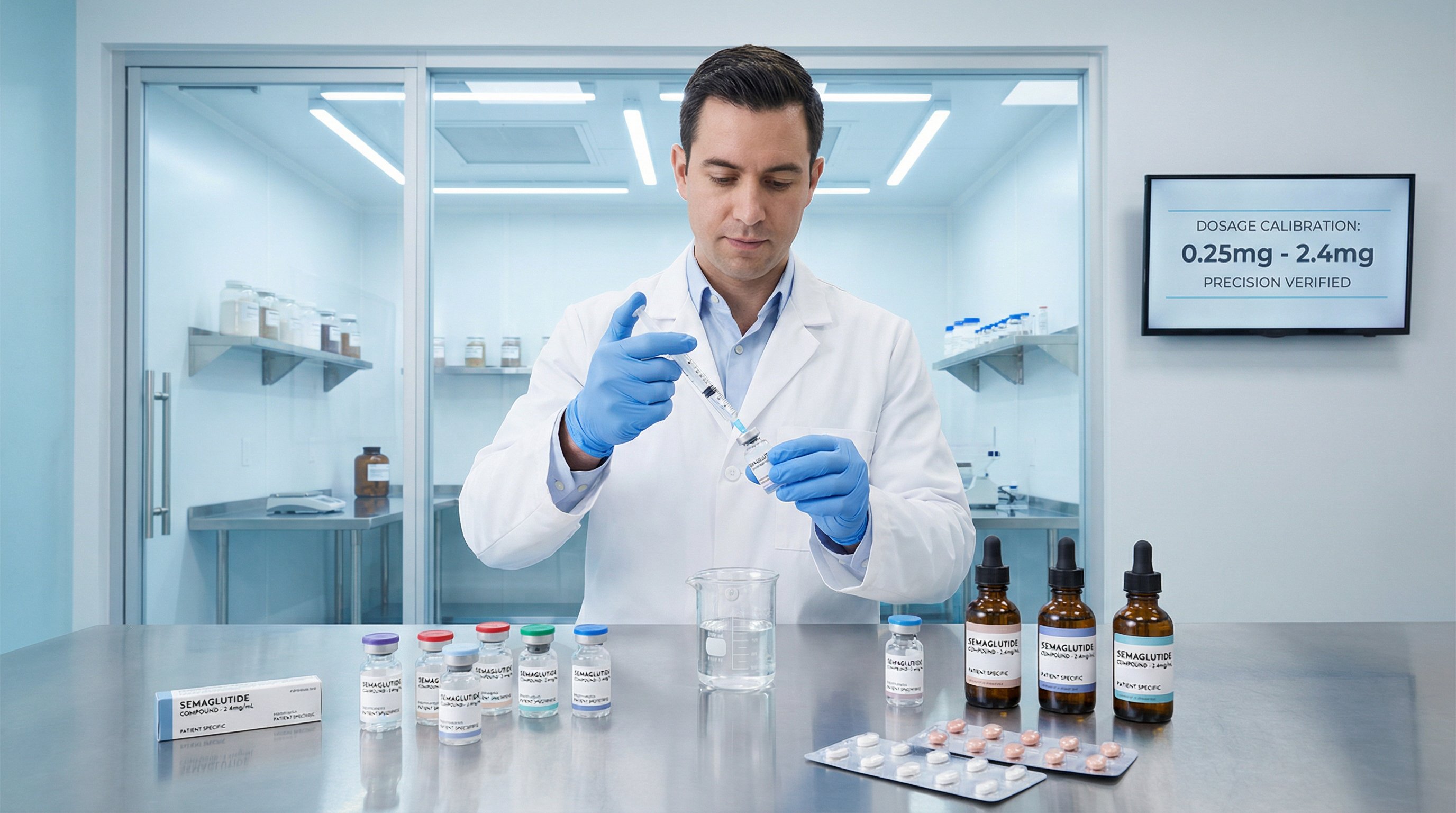
Compounded semaglutide is a custom-prepared version of the GLP-1 receptor agonist semaglutide. Instead of coming from Novo Nordisk's manufacturing facilities, it's produced by compounding pharmacies, either state-regulated 503A pharmacies or FDA-registered 503B outsourcing facilities.
The active ingredient is the same molecule that powers Ozempic, Wegovy, and Rybelsus. But, compounded versions may use semaglutide base or semaglutide salts (like semaglutide sodium or semaglutide acetate), and they come in forms you won't find on pharmacy shelves: subcutaneous injections, sublingual drops, oral tablets, and even nasal sprays.
Why It Exists
Three factors drove compounded semaglutide into the mainstream:
- Drug shortages. From 2022 through early 2025, Ozempic and Wegovy faced persistent supply disruptions. Compounding pharmacies were legally permitted to produce copies during this period under FDA shortage provisions.
- Cost. Brand-name semaglutide runs over $1,000 per month without insurance. Compounded versions have typically cost $150–$500 per month — one of the cheapest semaglutide alternatives available — making GLP-1 therapy accessible to patients who couldn't otherwise afford it.
- Customization. Some patients need adjusted dosages, allergen-free formulations, or alternative delivery methods. A compounding pharmacy can create formulations that Novo Nordisk doesn't offer.
It's worth understanding that compounded semaglutide is not FDA-approved. It hasn't gone through the same testing, manufacturing controls, or quality verification as branded products. That distinction matters, and it's the source of most of the controversy surrounding these products.
The clinical data behind semaglutide itself is strong. The STEP 1 trial demonstrated 14.9% mean weight loss versus 2.4% with placebo at 68 weeks across 1,961 patients. The SELECT trial showed a 20% reduction in major cardiac events. But those results were achieved with FDA-approved formulations, not compounded ones.
Compounded Semaglutide vs. FDA-Approved Brands: Key Differences
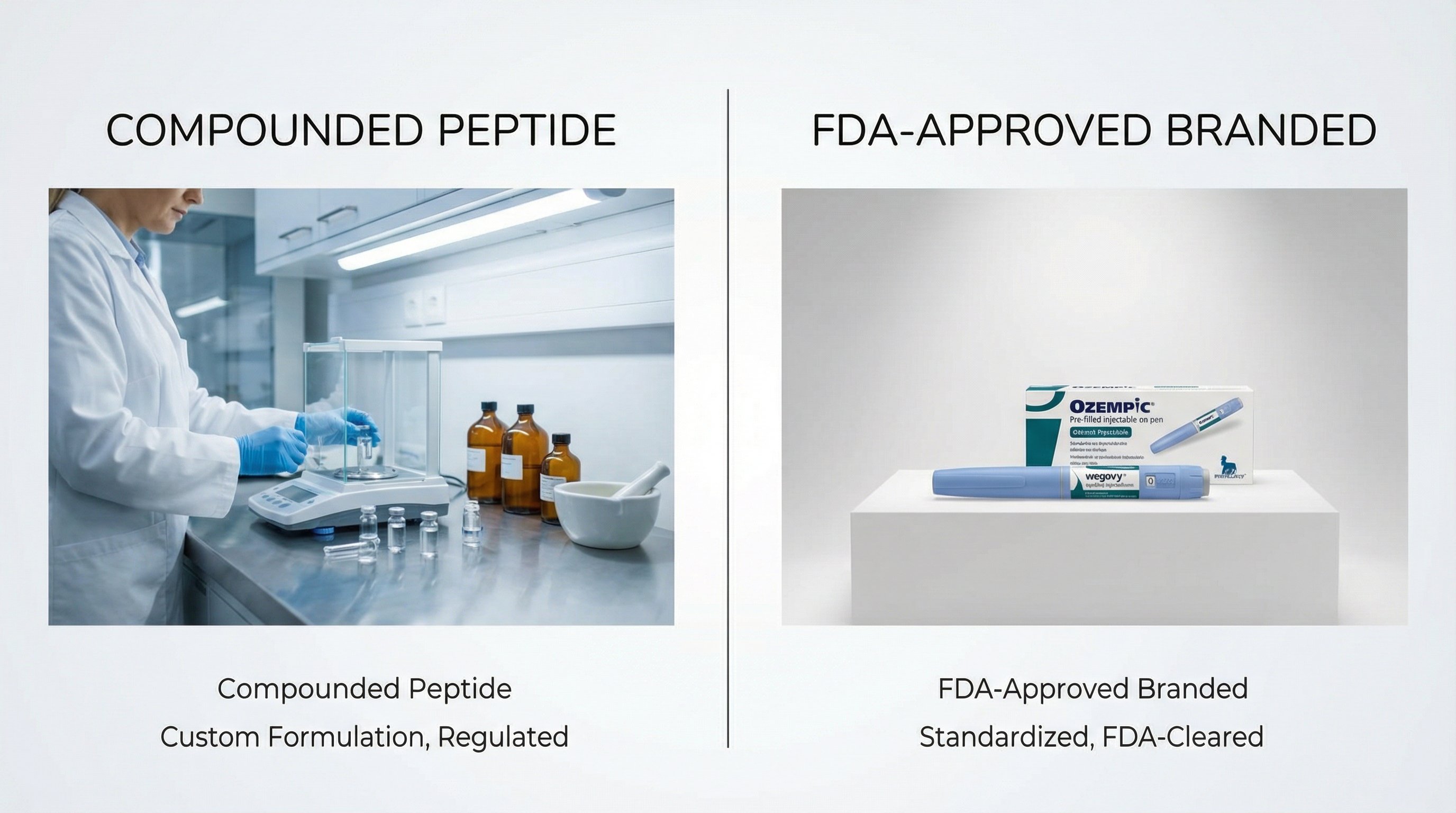
People often assume compounded semaglutide is just a cheaper version of the same thing. It's not that simple.
| Feature | Compounded Semaglutide | FDA-Approved (Ozempic/Wegovy/Rybelsus) |
|---|---|---|
| FDA approved | No | Yes |
| Manufacturer | State-regulated or 503B pharmacies | Novo Nordisk |
| Ingredients | Variable: may include salts, added vitamins (B12), or impurities | Consistent semaglutide base |
| Available forms | Injections, sublingual, oral, nasal | Pre-filled pens (SC) and tablets |
| Bioequivalence testing | None required | Extensive clinical trials |
| Cost | $150–$500/month | $1,000+/month without insurance |
The Bioequivalence Problem
Here's the critical issue: compounded semaglutide is not bioequivalent to brand-name products. No generic semaglutide exists. Bioequivalence means a drug delivers the same amount of active ingredient to the bloodstream at the same rate. Without that verification, there's no guarantee a compounded dose of 0.5 mg behaves like a branded 0.5 mg dose.
This isn't a theoretical concern. Compounded pharmacies using semaglutide salts instead of semaglutide base may deliver different effective doses. A patient who switches between compounded and branded versions, or between two different compounding pharmacies, could experience inconsistent results.
The Salt Question
Some compounders use semaglutide sodium rather than semaglutide base. The molecular weight differs, which means the actual peptide content per milligram changes. The FDA has flagged this as a safety concern because patients and even prescribers may not account for the difference when dosing.
For patients comparing options, FDA-approved semaglutide offers standardized potency, verified purity, and predictable pharmacokinetics. Compounded versions offer cost savings and flexibility, but with trade-offs in consistency and oversight.
Safety, Side Effects, and Risks to Consider

The safety profile of FDA-approved semaglutide is well-documented. Common side effects include nausea (about 44% of patients), diarrhea, constipation, headache, and injection site reactions. More serious but rare risks include pancreatitis, gallbladder events, and a boxed warning for medullary thyroid carcinoma (MTC) risk.
Compounded semaglutide carries all of those same risks, plus additional ones tied to manufacturing quality.
Compounding-Specific Risks
- Contamination. According to FDA data, compounding pharmacies account for roughly 45% of drug recalls even though producing a small fraction of total medications. Sterility failures are the most common issue.
- Impurities. Testing of compounded semaglutide products has found impurity levels as high as 33% in some samples. Impurities can cause unpredictable side effects or reduce the drug's effectiveness.
- Dosing errors. Without standardized manufacturing controls, the actual semaglutide content in a vial can vary from what's on the label. Under-dosing means the drug won't work. Over-dosing can trigger severe nausea, vomiting, or worse.
- Wrong ingredients. There have been documented cases of compounded products containing incorrect substances, including instances where semaglutide salts were substituted without appropriate dose adjustments.
Who Should Be Extra Cautious
Patients with a history of MTC or MEN2 syndrome should avoid all semaglutide products, compounded or otherwise. Those with severe gastroparesis, a history of pancreatitis, or who are pregnant or breastfeeding should also steer clear.
GI-sensitive patients deserve special mention. Even FDA-approved semaglutide causes significant gastrointestinal side effects. With compounded versions, inconsistent dosing can make GI symptoms harder to manage because the standard titration process becomes unpredictable.
Required Bloodwork
Regardless of which form of semaglutide a patient uses, baseline labs should include:
- HbA1c and fasting glucose (repeat at 12 weeks)
- Lipid panel
- Thyroid panel (TSH, fT4)
- Amylase and lipase
- Comprehensive metabolic panel (CMP)
These labs help identify contraindications and establish a monitoring baseline.
How to Find a Legitimate Compounded Semaglutide Provider

Not all compounding pharmacies operate at the same standard. The difference between a reputable compounder and a risky one can be the difference between effective treatment and a hospital visit.
503A vs. 503B Pharmacies
There are two categories of compounding pharmacies in the US:
- 503A pharmacies are traditional compounding pharmacies regulated by state boards. They fill individual prescriptions based on a specific patient-provider relationship.
- 503B outsourcing facilities are registered with the FDA and subject to federal oversight, including current Good Manufacturing Practice (cGMP) standards. They can produce larger batches without individual prescriptions.
503B facilities generally offer more consistent quality control because of the additional federal oversight. When choosing a compounded semaglutide provider, a 503B source is typically the safer bet.
Red Flags to Watch For
- No prescription required (a legal requirement for compounded semaglutide)
- No third-party testing or certificates of analysis available
- Prices that seem too good to be true (below $100/month should raise questions)
- Vague ingredient lists or refusal to disclose whether they use semaglutide base or salts
- No licensed prescriber involved in the process
Using a Provider Matching Service
Finding the right provider can be time-consuming, especially when patients need to verify pharmacy credentials, prescriber qualifications, and product quality simultaneously. Services like PeptideInjections.ai use AI-powered matching to connect patients with board-certified physicians who specialize in peptide therapy. The platform generates personalized protocol recommendations in about two minutes, removing much of the research burden from the patient's side.
Whatever route patients take, the non-negotiable requirement is a valid prescription from a licensed healthcare provider who can monitor treatment, adjust dosing, and order appropriate lab work.
What to Expect: Dosing, Administration, and Results

The standard FDA-approved semaglutide protocol provides a useful reference point, even for compounded versions.
Typical Dosing Schedule
FDA-approved semaglutide (Wegovy) follows a slow titration:
- Weeks 1–4: 0.25 mg/week
- Weeks 5–8: 0.5 mg/week
- Weeks 9–12: 1.0 mg/week
- Weeks 13–16: 1.7 mg/week
- Week 17+: 2.4 mg/week (maintenance)
Compounded semaglutide often follows a similar escalation pattern, though the exact schedule depends on the prescriber and the formulation used. Some providers use more gradual titration to reduce GI side effects.
Administration Methods
Subcutaneous injection remains the most common route, a small needle into the abdomen, thigh, or upper arm, once per week. Compounded versions may come in multi-dose vials rather than pre-filled pens, which means patients need to draw up their own doses. This introduces a small but real chance of dosing error.
Sublingual drops are a newer compounded option. They're placed under the tongue for absorption through the oral mucosa. Absorption rates can vary, and there's limited clinical data comparing sublingual semaglutide to injected forms.
Oral compounded tablets also exist, though the original Rybelsus (oral semaglutide) requires very specific conditions, taken fasted with no more than 4 oz of water, 30 minutes before food, to achieve adequate absorption. Compounded oral forms may not replicate these precise conditions.
Realistic Results
With FDA-approved semaglutide at the 2.4 mg maintenance dose, patients in the STEP 1 trial lost an average of 14.9% of body weight over 68 weeks. The STEP 5 trial showed weight loss was maintained at 104 weeks with continued treatment.
Compounded semaglutide may produce similar results if the formulation delivers equivalent bioavailability, but that "if" is significant. Patients should track their weight, appetite changes, and any side effects closely, and report results to their prescriber at regular intervals.
One important reality: weight regain is typical upon discontinuation. This applies to all forms of semaglutide. It's designed as ongoing chronic therapy, not a short-term fix.
Is Compounded Semaglutide the Right Choice for You?
The answer depends on individual circumstances. Here's a framework for thinking through it.
Compounded Semaglutide May Be a Good Fit If:
- Cost is the primary barrier to accessing GLP-1 therapy and insurance doesn't cover branded options
- A patient needs a customized formulation (specific dosage, allergen-free, alternative delivery method)
- A patient has been stable on compounded semaglutide and their provider confirms the pharmacy's quality
FDA-Approved Semaglutide Is Likely Better If:
- Insurance covers Ozempic or Wegovy (even partially)
- A patient is starting treatment for the first time and wants the most predictable, well-studied formulation
- Cardiovascular risk reduction is a treatment goal (the SELECT trial data applies only to approved semaglutide)
- A patient has a history of GI sensitivity and needs precise, consistent dosing
The Bigger Picture in 2026
The GLP-1 market is shifting fast. Tirzepatide (Mounjaro/Zepbound) has shown 20.9% weight loss in the SURMOUNT-1 trial, outperforming semaglutide alone. CagriSema, Novo Nordisk's combination of semaglutide with the amylin analog cagrilintide, delivered 20.4% weight loss in REDEFINE 1, with 60% of patients achieving 20% or greater weight loss. And retatrutide, a triple agonist, hit 28.7% mean weight loss in TRIUMPH-4.
Genetic factors also play a role. Patients with certain GLP1R variants (rs6923761 A/A genotype) tend to respond more strongly to semaglutide, while those with MC4R risk alleles may plateau earlier. For GLP-1 partial responders, dual-mechanism agents like tirzepatide may be more effective.
For patients who want help sorting through these options, platforms like PeptideInjections.ai can match them with specialized providers who understand the differences between compounded and branded therapies, and who can recommend the right protocol based on individual health profiles.
The bottom line: compounded semaglutide filled a real gap during the shortage years. In 2026, with more approved options and better availability, patients should weigh the cost savings against the trade-offs in quality assurance and clinical evidence.
Conclusion
Compounded semaglutide gave millions of patients access to GLP-1 therapy when branded options were scarce and unaffordable. That access mattered, and for some patients, it still does.
But the calculus has changed. The shortage is resolved, oral Wegovy is available, and next-generation therapies like tirzepatide and CagriSema are raising the bar for weight loss outcomes. Patients considering compounded semaglutide in 2026 should do so with clear eyes: verify the pharmacy's credentials, insist on third-party testing, work with a licensed prescriber, and get baseline bloodwork done.
The strongest move is an informed one. Whether that means choosing a compounded formulation for its cost advantage or switching to an FDA-approved option for its proven safety record, the decision should be guided by a qualified healthcare provider who knows the patient's full medical picture.
Frequently Asked Questions About Compounded Semaglutide
What is compounded semaglutide and how is it different from FDA-approved brands like Wegovy?
Compounded semaglutide is a custom-made version of the GLP-1 receptor agonist produced by state-regulated or FDA-registered compounding pharmacies, while Wegovy and Ozempic are manufactured by Novo Nordisk under strict FDA oversight. The key difference: compounded versions aren't bioequivalent to branded products, meaning they may deliver inconsistent doses, contain impurities up to 33%, and lack the same safety testing.
Is compounded semaglutide still legal to use after the FDA resolved the shortage in 2025?
Yes, compounded semaglutide remains legal with a valid prescription, but its role has changed. The FDA declared the injectable shortage resolved in February 2025, and oral Wegovy became available in January 2026. While compounding is still permitted, physicians now have FDA-approved alternatives, making compounded versions less necessary unless cost or customization is the primary driver.
What are the main safety risks of using compounded semaglutide?
Compounding pharmacies account for roughly 45% of drug recalls despite producing a small fraction of medications. Common risks include contamination, impurities up to 33%, inconsistent dosing, and wrong ingredients. Compounded semaglutide carries the same side effects as approved versions—nausea, diarrhea, pancreatitis—but manufacturing quality issues can amplify and unpredictably worsen these effects.
How should I choose between a 503A and 503B compounding pharmacy?
A 503B outsourcing facility is the safer choice. These are FDA-registered and subject to federal cGMP (current Good Manufacturing Practice) standards, offering more consistent quality control than state-regulated 503A pharmacies. A 503B facility's additional federal oversight and batch-testing protocols make it more likely to deliver reliable, contamination-free semaglutide.
What baseline bloodwork is required before starting any form of semaglutide?
Baseline labs should include HbA1c and fasting glucose, lipid panel, thyroid panel (TSH, fT4), amylase and lipase, and a comprehensive metabolic panel (CMP). These tests identify contraindications and establish a monitoring baseline. Repeat HbA1c and glucose testing at 12 weeks helps assess therapeutic response and safety.
Can I expect the same weight loss results from compounded semaglutide as from FDA-approved Wegovy?
FDA-approved semaglutide at 2.4 mg maintenance achieved 14.9% mean weight loss in clinical trials, with sustained results at 104 weeks. Compounded semaglutide may produce similar results if bioavailability is equivalent, but that's a significant 'if'—there's no guarantee dosing consistency or purity. Results depend entirely on the specific compounding pharmacy's quality control, which varies widely.